Bobby Bantick is a licensed REALTOR® with Bantick Properties on Cape Cod — and Harwich is home. Born and raised here, Bobby grew up fishing in Wychmere Harbor, spending summers on Bank Street Beach, and watching this town grow from a quiet fishing and cranberry community into one of the most desirable places to live on the Lower Cape. If you are considering a move to Harwich, MA, this guide is written by someone who does not just work here — he lives it every single day.
Why Harwich?
Harwich sits on the southern shore of the Lower Cape, with roughly 11 miles of coastline along Nantucket Sound. It is bordered by Dennis to the west, Brewster to the north, Orleans to the northeast, and Chatham to the east. The town was first settled by Europeans in 1670 and incorporated in 1694 — making it one of the oldest communities on the Cape. Brewster was originally part of Harwich before splitting off as its own town in 1803.
What makes Harwich distinctive is its balance. It is not as expensive or exclusive as Chatham, not as quiet as Brewster, and not as commercially developed as Dennis. It sits right in the middle — a year-round working town with genuine community roots, strong schools, three active harbors, beautiful beaches, cranberry bogs, and a pace of life that attracts families, retirees, and everyone in between.
The year-round population is approximately 13,400. In summer, that number swells to around 37,000 as seasonal residents, renters, and visitors fill the town's beaches and harbors. But even at peak season, Harwich retains the feeling of a town where neighbors still know each other — and that is not something you can say about every Cape Cod community.
What are the villages of Harwich?
Harwich is sometimes called "The Harwiches" because the town is made up of seven distinct villages. Understanding the villages is essential if you are looking to buy here, because each one offers a different lifestyle, price point, and character.
Harwich Port
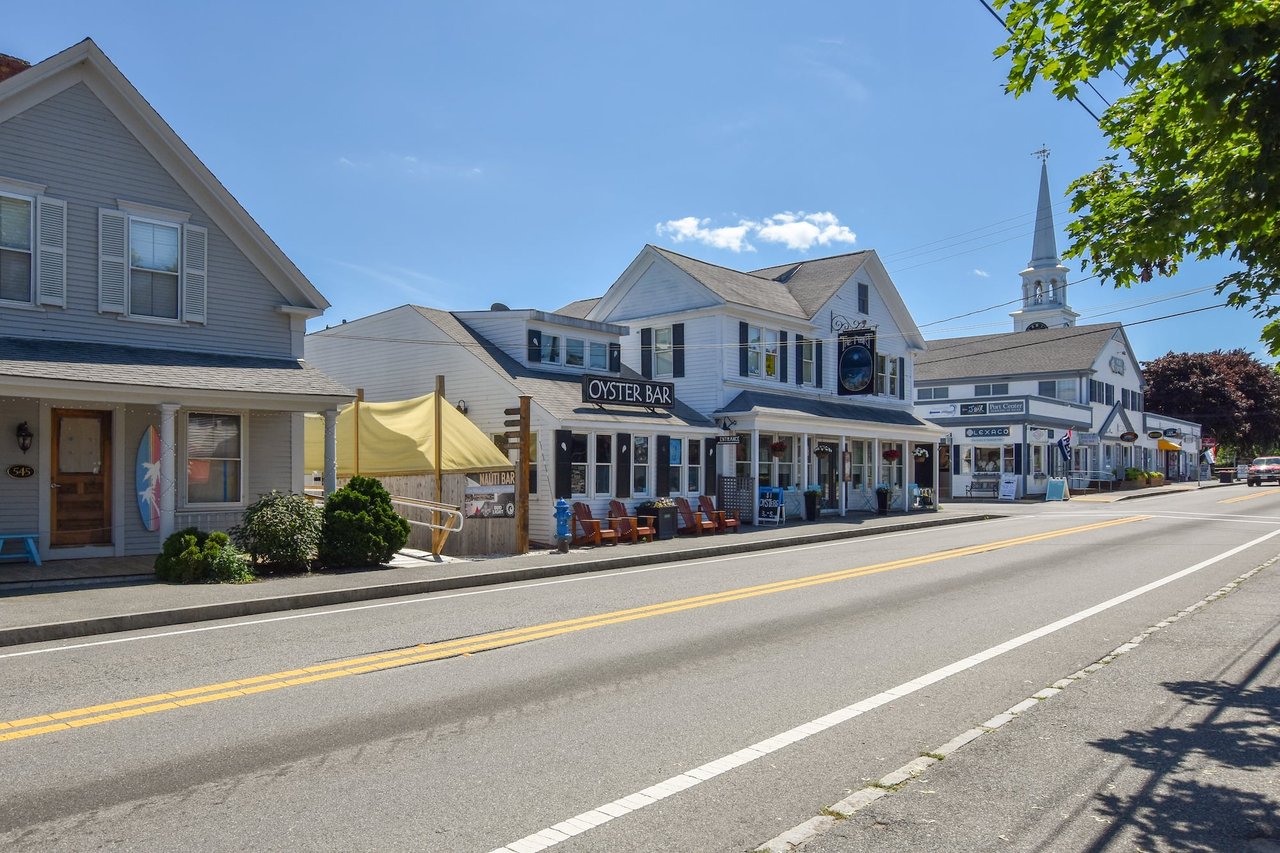
Harwich Port is the social and commercial heart of the town. This is where you will find the three harbors — Wychmere, Saquatucket, and Allen — along with restaurants, shops, galleries, and the majority of the town's waterfront activity. Bank Street Beach and Earle Road Beach are both in Harwich Port. Route 28 runs through the village and serves as the main commercial corridor.
If you want walkability, harbor views, and the energy of being close to the action, Harwich Port is the area to focus on. Properties here range from modest village cottages to waterfront estates, and the pricing reflects the desirability of the location. Wychmere Harbor in particular is one of the most photographed harbors on Cape Cod, and the homes surrounding it command some of the highest prices in town.
Harwich Center
Harwich Center is the civic hub of the town. Town Hall, the Harwich Community Center, and Brooks Park — the park Bobby grew up going to — are all here. The First Congregational Church, Brooks Academy (a beautifully preserved 1844 schoolhouse), and the Harwich Cultural Center anchor the village center.
Harwich Center has a quieter, more residential feel than Harwich Port. Properties tend to be slightly more affordable, and the village is popular with families who want to be close to town services, the community center, and the schools without paying the waterfront premium.
East Harwich
East Harwich has become one of the fastest-growing areas in town. Located along Route 39 and closer to the Chatham and Orleans borders, East Harwich has seen significant development over the past two decades. You will find newer construction here — including subdivisions and custom-built homes — alongside more traditional Cape properties.
East Harwich is also where the Cape Cod Rail Trail crosses through town, connecting to Brewster, Chatham, and beyond. For families and active buyers who want newer homes, more space, and easy trail access, East Harwich is worth serious consideration.
West Harwich
West Harwich borders Dennis and offers practical convenience. Route 28 runs through the village, providing access to shops, restaurants, and services. The beaches in West Harwich — including Grey Neck Road Beach — are quieter alternatives to the more popular Harwich Port beaches.
For buyers looking for a Harwich address at a more accessible price point, West Harwich often delivers. The lots tend to be slightly more modest in size, but the proximity to both Harwich Port and Dennis makes it a convenient location for daily life.
South Harwich
South Harwich is a quieter, more residential area south of Route 28 and closer to Chatham. Red River Beach — one of the most popular beaches in Harwich, known for its shells and sea glass — is located in South Harwich. The area has a relaxed, slightly removed feel that appeals to buyers who want peace and beach access without the busier energy of Harwich Port.
North Harwich
North Harwich is the inland part of town, home to many of the cranberry bogs that make Harwich famous. The landscape here is wooded, rural, and distinctly different from the coastal villages. Long Pond — the largest freshwater body on Cape Cod, shared with Brewster — is accessible from North Harwich, and Sand Pond offers a secluded freshwater swimming spot.
If you want space, privacy, and the Cape's agricultural character, North Harwich delivers. It also tends to be the most affordable part of town, though that is changing as demand for year-round housing continues to grow.
Pleasant Lake
Pleasant Lake is a small, quiet residential area in the northern part of town. It is centered around the pond of the same name and has a tight-knit, neighborhood feel. Properties here are modest and well-established.
What does year-round life in Harwich look like?
This is the question Bobby gets asked more than almost any other — and it is the one he is best positioned to answer, because he lives it.
Summer
Summer in Harwich is exactly what you picture when you think of Cape Cod. The harbors are packed with boats. Bank Street Beach, Earle Road Beach, and Red River Beach fill up with families. The Harwich Mariners — the town's Cape Cod Baseball League team — play at Whitehouse Field, and the games are a tradition that locals genuinely love. Restaurants on Route 28 in Harwich Port are busy. The ferry terminal at Saquatucket Harbor runs boats to Nantucket. The energy is high, the days are long, and the town is at its most vibrant.
Fall
Fall is when Harwich shows its deepest character. The annual Harwich Cranberry Festival in September is the signature event of the year — a celebration of the town's cranberry heritage with a parade, fireworks, live music, a road race, and craft vendors. It draws thousands and marks the unofficial transition from summer to the quieter months ahead.
After the festival, the beaches empty, the traffic disappears, and the town belongs to the people who live here year-round. Fall on the Lower Cape is stunning — mild days, golden light, uncrowded beaches, and a pace that most visitors never get to experience.
Winter
Winter in Harwich is quiet and honest. Some seasonal businesses close. The harbors are still. Brooks Park gets a dusting of snow. But the year-round community carries on — school events, town meetings, morning walks on Bank Street Beach with your dog, coffee at the local spots that stay open all year. For people who grew up here, winter is when Harwich feels most like home. It is the season that separates visitors from residents.
Spring
Spring on the Cape comes slowly. By April, the cranberry bogs flood for harvest preparation, the harbors start seeing boats go back in the water, and the anticipation of summer builds. Harwich in spring is about renewal — and for the real estate market, it is when listing activity starts to pick up.
What does the Harwich real estate market look like right now?
Harwich continues to be one of the strongest markets on the Lower Cape, with consistent demand across a wide range of price points.
Based on the most recent MLS data, the current median sold price in Harwich is $825,000. The average sold price is higher at approximately $1,224,000, reflecting activity at the upper end of the market — recent sales have closed from $350,000 up to $4,550,000.
Well-priced homes in good condition are selling fast. The median days on market is just 11 days. There are currently 45 active listings and 34 homes under contract or pending, which signals that buyer demand remains strong and inventory is turning over quickly.
Harwich offers an unusually wide range of housing options for a Cape Cod town. The data includes 98 single-family homes and 37 condominiums, with year built ranging from 1800 to 2026. You will find antique capes, mid-century ranches, waterfront cottages, condo communities, and newly constructed custom homes — sometimes all within the same village. The median lot size is just under half an acre, though properties in North Harwich and East Harwich tend to be larger.
One important note for buyers considering Harwich: the town is currently in Phase 3 of a multi-year comprehensive sewer and wastewater project. This is a significant infrastructure investment that is improving water quality and environmental compliance. For some properties, this means future sewer connections and related assessments. Bobby can walk you through how this may affect specific areas of town.
What are Harwich's property taxes?
Harwich's FY2026 residential tax rate is $5.69 per thousand dollars of assessed value, down from $5.91 the prior year. The rate has been trending downward for several years — it was $8.60 in FY2021 — as rising property values have allowed the town to maintain its budget at a lower per-thousand rate.
The town's total assessed valuation has reached $10.9 billion, with the average residential property now valued at approximately $910,000.
For a practical example: a home assessed at $800,000 in Harwich would carry an annual tax bill of approximately $4,552. That is competitive with most Lower Cape towns and significantly lower than many Mid-Cape and Upper Cape communities.
Harwich currently maintains a single tax rate for all property classes and does not offer a residential exemption for year-round homeowners, though that discussion comes up at town meeting periodically.
What about schools in Harwich?
Harwich is part of the Monomoy Regional School District, which the town shares with Chatham. The district includes Harwich Elementary School (located in Harwich), Monomoy Regional Middle School (located in Chatham), and Monomoy Regional High School (located in Harwich).
Monomoy Regional High School opened in 2014 after the Chatham and Harwich school districts merged, and it is physically located in Harwich on Oak Street. The merger created a larger, better-resourced district than either town could have supported independently, and the school has quickly established a strong reputation on the Cape. The mascot is the Sharks, and the athletic teams compete in the Cape and Islands League.
Cape Cod Regional Technical High School is also located in Harwich, offering vocational and technical education to students from across the Lower and Mid-Cape. And the Cape Cod Lighthouse Charter School in East Harwich provides an additional option for elementary-age students.
For families, Harwich's school situation is genuinely strong. You get the benefits of a well-run regional district, the convenience of having the high school and the tech school both in town, and a community that is invested in education.
Beaches, harbors, and outdoor life in Harwich
Harwich's coastline along Nantucket Sound is what draws most buyers to the town — and what keeps them here.
The harbors
Three active harbors — Saquatucket, Wychmere, and Allen — define Harwich Port's waterfront identity. Saquatucket Harbor is the largest and serves as the departure point for the seasonal Nantucket ferry. Wychmere Harbor is smaller, more intimate, and widely considered one of the most picturesque harbors on all of Cape Cod. Allen Harbor is quieter and home to the Allen Harbor Yacht Club.
If boating is part of your lifestyle, Harwich's harbor access is a major advantage over most Cape Cod towns. Marina slips, mooring permits, and harbor access are managed through the town's harbormaster office.
Sound-side beaches
Harwich's beaches line the Nantucket Sound coast, which means warmer, calmer water than the ocean-facing beaches on the Atlantic side. The main public beaches with parking and facilities include Bank Street Beach, Earle Road Beach, Pleasant Road Beach, and Red River Beach. Grey Neck Road Beach in West Harwich is a quieter option.
Red River Beach in South Harwich is a local favorite — known for sea glass, shells, and a family-friendly atmosphere. Bank Street Beach is the closest to Harwich Port village and is popular with families and visitors throughout the season.
Beach parking stickers are required during the summer season and are available through Town Hall. Resident stickers are $30 and non-resident stickers are $150.
Freshwater ponds
Long Pond — the largest freshwater body on Cape Cod — is shared between Harwich and Brewster. Public beach access is available off Long Pond Drive and Cahoon Road. Long Pond is excellent for swimming, kayaking, paddleboarding, and fishing.
Sand Pond in North Harwich is a smaller, more secluded freshwater swimming spot that locals treasure. Herring River, a large estuary with a 200-acre conservation trust, is another significant natural resource in North Harwich.
Cranberry bogs and conservation land
Harwich is considered the birthplace of commercial cranberry cultivation in America — the first commercial bog opened here in 1846. Active cranberry bogs are still part of the landscape, particularly in North Harwich, and the town's cranberry heritage is celebrated every September at the Harwich Cranberry Festival.
The Harwich Conservation Trust maintains hundreds of acres of protected land across town, with trails for walking, birding, and nature study. Hawksnest State Park in East Harwich offers additional trail access. For buyers who value open space and conservation, Harwich delivers.
Golf
Cranberry Valley Golf Course is Harwich's well-regarded public course, and Harwich Port Golf Club offers a more intimate experience near the harbor. Nearby options include the private Eastward Ho! in Chatham and Cape Cod National in Brewster.
Who lives in Harwich?
Harwich has one of the most balanced communities on the Lower Cape. You will find retirees who moved here full-time, young families raising kids in the Monomoy schools, remote workers who made the leap from Boston or beyond, tradespeople and small business owners who have been here for generations, and seasonal residents who split their time between Harwich and somewhere else.
The median age is around 60, but that number does not capture the full picture. Harwich Elementary is active and well-enrolled. Youth sports, the community center, and family programming at Brooks Park all point to a town that has a genuine younger-family presence alongside its retiree population.
The town uses an open town meeting form of government, and civic participation runs deep. Town meeting attendance is strong, volunteer committees are active, and Harwich residents take ownership of their community in a way that reflects the town's character — unpretentious, practical, and engaged.
How does Harwich compare to neighboring towns?
This is one of the most common questions Bobby hears from buyers, and the answer depends entirely on what you are looking for.
Harwich vs. Chatham: Chatham is more of a resort and luxury market with higher prices, a walkable downtown, and Atlantic coastline. Harwich is a stronger year-round community with a wider price range, Nantucket Sound beaches, and a more practical, family-oriented feel. The two towns share the Monomoy school district and are immediate neighbors.
Harwich vs. Brewster: Brewster is nature-oriented with Nickerson State Park, Cape Cod Bay beaches, and Route 6A's historic charm. Harwich is more harbor-focused with Nantucket Sound beaches and a more active commercial village in Harwich Port. Brewster tends to be slightly more affordable; Harwich offers more variety in housing types.
Harwich vs. Dennis: Dennis has five villages spread across both the bay and sound sides of the Cape. Harwich is more compact and cohesive, with stronger harbor infrastructure and a tighter year-round community. Dennis offers more variety in geography; Harwich offers more variety in housing.
Frequently asked questions about living in Harwich MA
Is Harwich a good place to live year-round?
Absolutely. Harwich has one of the strongest year-round communities on the Lower Cape, with consistent services, active civic life, good schools, and a community that genuinely functions beyond beach season. Bobby grew up here year-round and can speak to this firsthand.
How far is Harwich from Boston?
Harwich is approximately 85 miles from Boston, roughly a 90-minute drive without traffic. Summer weekend traffic can extend the drive significantly, particularly on Friday evenings and Sunday afternoons.
What is the average home price in Harwich MA?
The current median sold price is $825,000 and the average sold price is approximately $1,224,000. Prices range widely — from $350,000 for condos and smaller properties up to $4,550,000 for waterfront estates. Harwich offers one of the widest price ranges of any Lower Cape town.
Are there good schools in Harwich?
Yes. Harwich is part of the Monomoy Regional School District (shared with Chatham), and the high school is located in Harwich. Cape Cod Tech is also in Harwich. The district is well-regarded on the Cape.
What is the Harwich Cranberry Festival?
The Harwich Cranberry Festival is held annually in September and is the town's signature community event. It celebrates Harwich's heritage as the birthplace of commercial cranberry cultivation in America. The festival includes a parade, fireworks, live music, a road race, craft vendors, and cranberry bog tours.
Does Harwich have a ferry to Nantucket?
Yes. The Freedom Cruise Line operates a seasonal passenger ferry from Saquatucket Harbor in Harwich Port to Nantucket. The crossing takes approximately 80 minutes. This is a major convenience for Harwich residents and a draw for buyers who want island access without driving to Hyannis.
What is the sewer project in Harwich?
Harwich is in Phase 3 of a comprehensive sewer and wastewater project that is upgrading the town's infrastructure and improving water quality. This affects certain areas of town and may involve future sewer connections and assessments for some properties. Bobby can explain how this applies to any specific property you are considering.
Ready to explore Harwich?
There is no substitute for local knowledge, and Bobby Bantick's knowledge of Harwich is as local as it gets. He grew up here, he lives here, and he helps buyers and sellers navigate this market every day across Harwich, Chatham, Brewster, Dennis, and all of Barnstable County.
Call Bobby at (508) 958-1041 or visit bantickproperties.com to start the conversation. Expect Better.